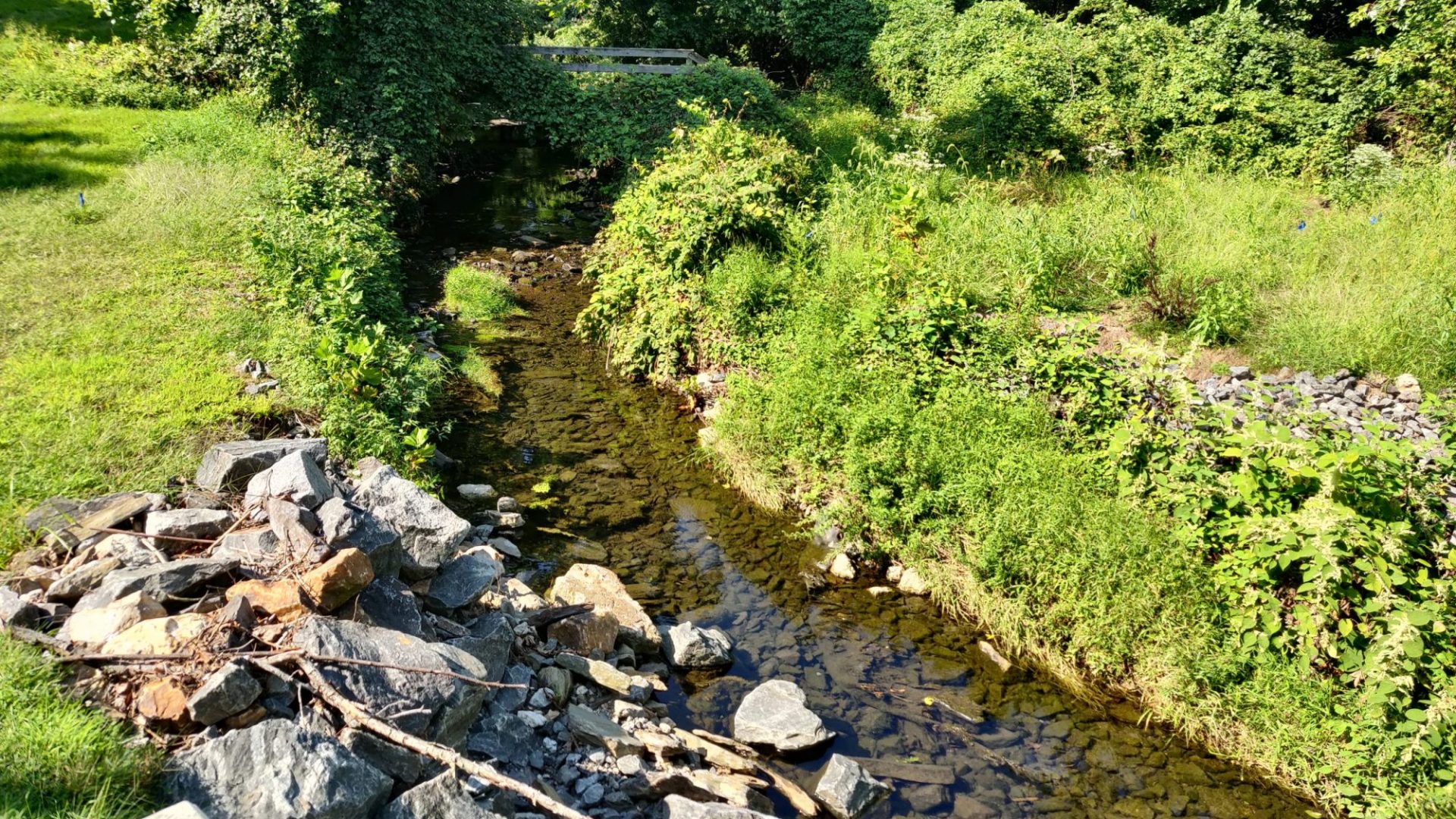
Prior to the arrival of European settlers, the Cobbs Creek region was home to the Lenni Lenape peoples. Not confined to specific geopolitical boundaries, the tribe all along the creek, known as “karakung,” used the resource dense creek environment for hunting, fishing, agriculture, and transportation. However, upon the arrival of the Dutch, Swedish, and English Quakers, the Lenape were displaced by the drainage of marshes by the Europeans, who wanted to make room for pastures. The nomenclature surrounding the Creek demonstrates the Lenape legacy, with areas such as Kingsessing (meaning “where there is meadow”) maintaining their Lenape titles. Other examples of this include the village of Arronemink (meaning “where the fish cease”) located at the mouth of mill creek, as well as a variety of streets in more urban Philadelphia. To see more about indigenous histories surrounding the creek, as well as further resources about the Lenape check out http://www.phillyh2o.org/backpages/cobbs.htm.
June 10, 1650 Source: Adam Levine and http://www.phillyh2o.org/backpages/cobbs.htm
December 16, 1677 5 years before William Penn founded Philadelphia He came to a land already inhabited by the Lenape, specifically the Unami band
October 1, 1682 Treaty of Friendship created Along the Delaware River at Shackamaxon – a sacred gathering place for Lenapes chiefs of the Lenape (represented by their spokesman Chief Tamanend) met with William Penn “living as one flesh and one blood . . . as long as the creeks and rivers run and the sun, moon and stars endure.” – reportedly stated by William Penn and Chief Tamanend Relationship with William Penn was good and still honored by the Lenape
January 1, 1737 After Willaim Penn returned to England his sons began to sell land owned by the Lenape The Penns presented an old and invalid document that deeded as much land to the Penns as could be covered in a day-and-a-half length’s walk. The Lenape trusted and had a good relationship with William so they agreed. The Penns had the path cleared and hired the three fastest runners in the province to run the distance. Only one finished and ran 55 miles. The Penns additionally tilted the map…
December 31, 1840 This is William Rodgers house, built opposite the Upper Cobbs Creek dam. He ran the Nitre Hall Powder Mills for the mills’ last years in the powder mill business from 1825-1840. The Nitre Hall Powder Mills prospered with an output of 800,000 pounds of gun powder produced during the war of 1812. More information can be found here: http://www.phillyh2o.org/backpages/cobbs_eckfeldtbook.htm.
June 10, 1850 A number of cemetery companies begin purchasing large tracts of the watershed in the mid-19th century. Mt. Moriah, Fernwood, Holy Cross, and Arlington cemeteries were established. Find more details here.
June 10, 1866 The West End Mill was built at S. 64th and South St. (now Cedar Ave.), which is now the middle of Cobbs Creek Park. The mill primarily produced cotton fabrics and some woolens. More information can be found here.
June 10, 1895 The completion of MIll Creek sewer marked the start of unimpeded development toward Cobbs Creek. Click here for more information.
June 10, 1906 The construction of the Market-Frankford Railroad allowed suburban residents quick access to the city. http://www.phillyh2o.org/backpages/cobbs.htm
June 10, 1911 Learn more about the history of Cobbs Creek Park and trail here.
June 10, 1965 https://water.phila.gov/pool/files/Darby_Cobbs_WMP.pdf
May 13, 1985 A Philadelphia police helicopter dropped a bomb onto the MOVE compound, where Black militant anarcho-primitivist community members lived together in a townhouse. The resulting fire destroyed 65 houses, killing six MOVE members and five of their children. Learn more here.
June 10, 2011 The trail provides access to Cobbs Cree Environmental Education Center, Laura Sims Skate House, Mount Moriah Cemetery, and several children’s playgrounds. There are also future plans to link the John Heinz Wildlife Refuge through the Cobbs Creek Connector Trail. For more information and map access, click here.
October 9, 2020 The Cobbs Creek Restoration and Community Foundation non-profit developed, prompting a $20 million renovation of the historic Cobbs Creek Golf Course. The site will be closed until 2023.
European Settlers Divert Streams to Power Growing Number of Mills
Quaker William Warner was the first European to settle in West Philadelphia (1677)
Penn Treaty
Walking Purchase
The Old Powder Mills in the Upper Cobbs Creek ran until the 1840s

Cemetery Companies Purchase Large Tracts of the Cobbs Creek Watershed
West End Mill Built in What is Currently the Center of Cobbs Creek Park
Mill Creek Sewer Completed in West Philadelphia
Market-Frankford Elevated Railroad Constructed
Cobbs Creek Park Built
The United States Geological Survey (USGS) Establishes Streamflow-Gauging Stations at Six Locations in the Darby-Cobbs Creek Watershed
Philadelphia Police Drop Bomb on MOVE Compound
Plans Undertaken to Develop 3.7 Mile Cobbs Creek Trail
Development of Cobbs Creek Restoration and Community Foundation